 anabelle
 By anabelle
 Fact checked by Edward Harrington
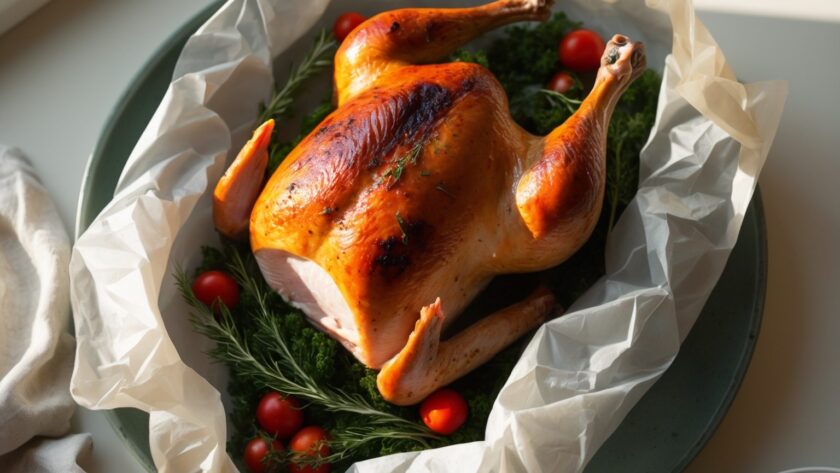
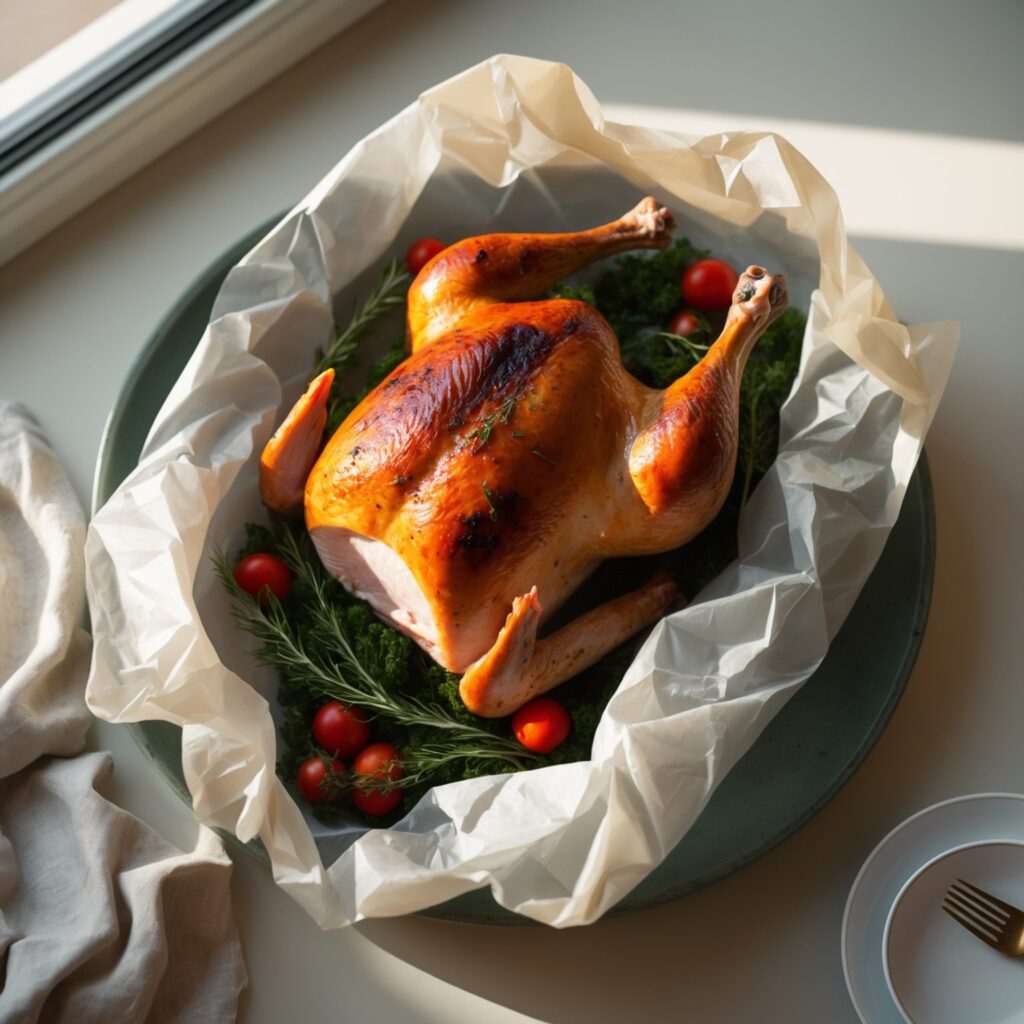
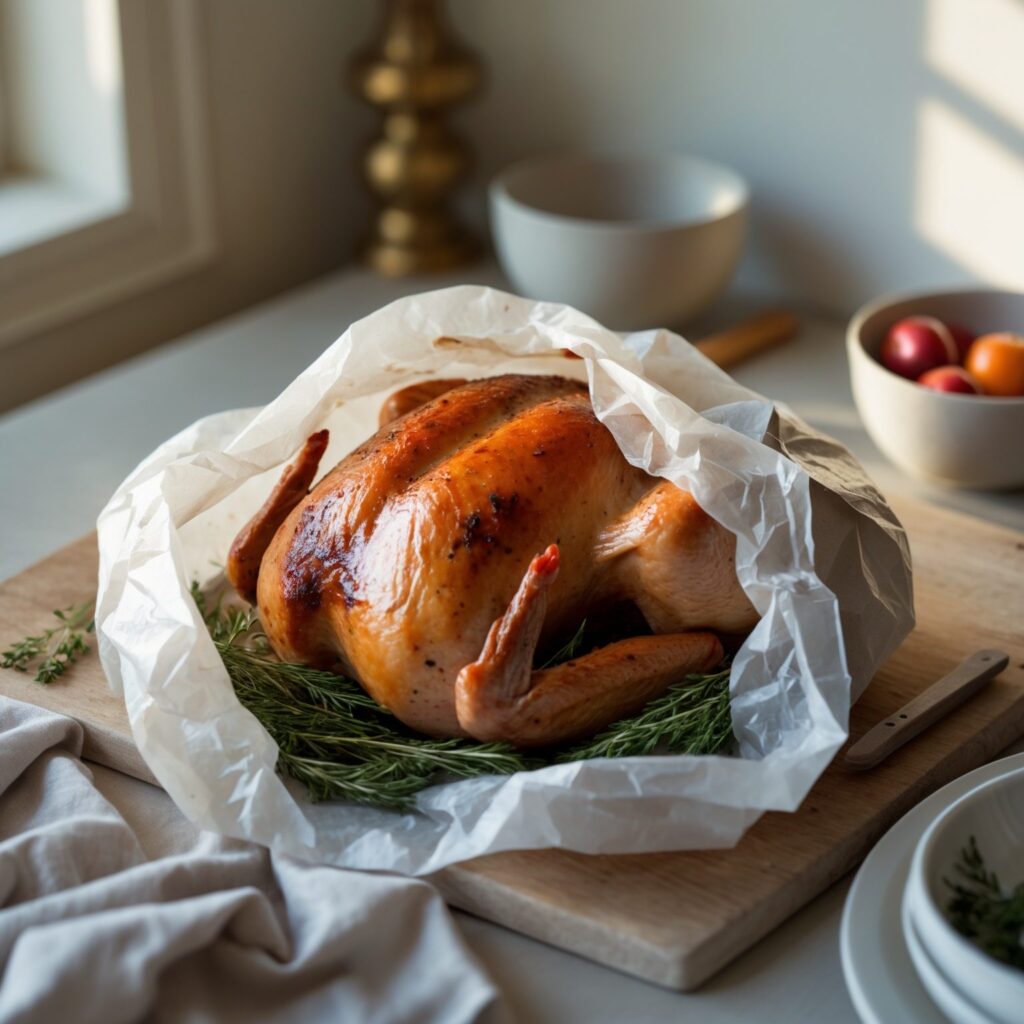
Martha Stewart turkey in parchment paper is a bone-in turkey breast roasted inside a sealed packet with carrots, leeks, and lemon, and the result is tender, juicy meat under golden skin. The herb butter — sage, thyme, and lemon zest worked into softened butter — seeps into the meat as it cooks, so every slice tastes bright and savory. The vegetables steam in the same parcel and soak up the drippings, and the juices left at the bottom make a quick buttery sauce. This version is inspired by Martha Stewart, and it is one of the simplest ways I know to get a holiday-style centerpiece without fussing over a whole bird.
It takes 95 minutes from start to finish, with about 20 minutes of that being hands-on work, so it is easy enough for a Sunday dinner and special enough for a holiday table. The packet does most of the work for you. I make it for weeknights when I want leftovers, for Thanksgiving when I am cooking for a small group, and for potlucks where I need something that travels well.
Why This Martha Stewart Turkey in Parchment Paper Works
The parchment packet traps steam around the breast, which keeps the meat moist even though a bone-in turkey breast is lean and prone to drying out. Loosening the skin and spreading herb butter directly on the meat means the flavor goes deep into the slices, not just on the surface. The vegetables act as a bed, so the turkey sits above the liquid and roasts evenly instead of steaming in its own juices.
Finishing with a slit in the parchment lets the steam out so the skin can crisp, and the juices left behind reduce in minutes into a sauce. Nothing is wasted, and there is only one pan to wash.
What You’ll Love About It
You get juicy, herb-scented turkey with golden skin from a single roasting pan, plus vegetables that cook right alongside the meat. The parchment packet keeps cleanup down to almost nothing, and the lemony pan juices turn into a bright sauce with no extra effort.
Ingredients
Use a bone-in breast with the skin on — the bone protects the meat and the skin carries the herb butter.
- 1 whole bone-in turkey breast — 4 to 4 1/2 pounds (1.8-2kg), skin on
- 2 teaspoons kosher salt
- 1 teaspoon freshly ground black pepper
- 4 tablespoons (57g) unsalted butter — softened
- 2 tablespoons finely chopped fresh sage
- 1 tablespoon finely chopped fresh thyme leaves
- 1 tablespoon finely grated lemon zest — from 1 lemon
- 2 medium carrots — about 8 ounces (225g) total, peeled and cut into 3-inch (7.5cm) sticks
- 2 medium leeks — about 1 pound (450g) total, white and light green parts only, halved lengthwise and rinsed well
- 1 lemon — thinly sliced
- 2 tablespoons fresh lemon juice — from 1 lemon
- 1/2 cup (120ml) low-sodium chicken broth
Equipment
- Large roasting pan — big enough to hold the crossed parchment sheets and the breast
- Instant-read thermometer — the only reliable way to check doneness
- Parchment paper — two pieces, about 30 inches (76cm) long each
- Small bowl — for mashing the herb butter
- Small saucepan — for reducing the juices
- Carving board — with a slight well to catch juices
How to Make Martha Stewart Turkey in Parchment Paper
Step 1: Dry and Season the Turkey
Pat the turkey breast dry with paper towels and season all over, including under the skin, with the 2 teaspoons kosher salt and 1 teaspoon pepper. Let it sit at room temperature for 20 minutes while you prepare the herb butter and vegetables. Cold turkey roasts unevenly, so don’t skip this rest.
Step 2: Mix the Herb Butter and Tuck It Under the Skin
Mash the 4 tablespoons (57g) softened butter with the 2 tablespoons sage, 1 tablespoon thyme, and 1 tablespoon lemon zest in a small bowl until evenly combined. Loosen the skin over the breast with your fingers, being careful not to tear it, and spread half the herb butter directly onto the meat under the skin. Work gently — a torn skin lets the butter escape and the breast dries out.
Step 3: Set Up the Parchment
Heat the oven to 350°F (175°C). Cut two pieces of parchment paper large enough to wrap the turkey with plenty of overlap, about 30 inches (76cm) long each, and lay them crossed in a large roasting pan to form an X. The overlap is what lets you seal the packet tightly later.
Step 4: Build the Vegetable Bed
Scatter the carrot sticks and leeks over the center of the parchment where the turkey will sit. Rub the remaining herb butter over the outside of the turkey skin, then set the breast on the vegetables, skin side up. The vegetables lift the meat off the parchment so the heat moves around it.
Step 5: Add the Lemon, Broth, and Seal the Packet
Tuck the lemon slices around the turkey and drizzle the 2 tablespoons lemon juice and 1/2 cup (120ml) chicken broth over the vegetables. Bring the parchment edges together over the top, fold them over several times to seal, and tuck the ends underneath to create a tight packet. Any gap lets steam escape and the meat will cook unevenly.
Step 6: Roast the Sealed Packet
Roast the turkey in the parchment packet for 45 minutes. The packet will puff and the vegetables will begin to soften. Don’t open it at this point, since the trapped steam is what keeps the breast moist.
Step 7: Vent the Packet and Finish Roasting
Cut a slit in the top of the parchment to let steam escape and continue roasting until an instant-read thermometer inserted into the thickest part of the breast, without touching bone, registers 165°F (74°C), 20 to 30 minutes more. If the skin is pale, open the parchment fully for the last 10 minutes to let it brown. Watch it closely at that stage — the skin can go from golden to dark quickly.
Step 8: Rest the Turkey
Transfer the turkey to a carving board and let it rest, loosely tented with foil, for 15 minutes so the juices can redistribute. Carving too soon will dry out the slices.
Step 9: Make the Sauce
While the turkey rests, spoon the roasted carrots and leeks into a serving dish and pour the juices from the parchment into a small saucepan. Simmer over medium heat for 2 to 3 minutes until slightly reduced, then taste and adjust the seasoning. The sauce should look glossy and coat the back of a spoon.
Step 10: Carve and Serve
Carve the turkey breast against the grain into 1/2-inch (1.3cm) slices, discarding the bone, and arrange on a platter. Spoon the pan juices over the slices and serve with the roasted vegetables and lemon slices.
What to Serve With It
Mashed potatoes or buttered egg noodles soak up the lemony pan juices nicely, and a simple green salad or roasted green beans add freshness. Warm dinner rolls round out the plate. For a holiday meal, cranberry sauce on the side works well with the sage and thyme.
Tips for the Best Results
- Room temperature start — the 20-minute rest helps the breast cook evenly through.
- Dry the skin — a dry surface browns faster once the parchment is opened.
- Seal tight — press every fold firmly so no steam escapes early.
- Check off the bone — the thermometer tip should hit meat, not bone, for a true reading.
- Rest before slicing — the full 15 minutes keeps the juices in the meat.
- Save the juices — every drop from the parchment is flavor for the sauce.
Easy Variations
- Orange and rosemary — swap the lemon zest for 1 tablespoon orange zest and the sage for 1 tablespoon rosemary.
- Smoky note — add 1/2 teaspoon smoked paprika to the herb butter for a deeper flavor.
- Root vegetable mix — replace the carrots with 8 ounces (225g) parsnips cut into sticks.
- Extra sauce — stir 2 tablespoons butter into the reduced juices for a richer finish.
Storing and Reheating
- Refrigerator — store leftovers in an airtight container for up to 4 days.
- Freezer — wrap sliced turkey and vegetables separately and freeze for up to 3 months.
- Thaw overnight — move frozen portions to the refrigerator the night before reheating.
- Reheat covered — warm in a 350°F (175°C) oven for 15 to 20 minutes to 165°F (74°C).
Nutrition (per serving)
These values are estimates per serving and will vary with the size of your breast and how much sauce you spoon over.
| Nutrient | Amount |
|---|---|
| Calories | 442 kcal |
| Protein | 49g |
| Carbs | 11g |
| Fat | 22g |
| Fiber | 2g |
| Sodium | 844mg |
FAQs
Can I make this Martha Stewart turkey in parchment paper recipe ahead of time?
The herb butter can be mixed and refrigerated up to 3 days in advance, and the vegetables can be cut and stored in the refrigerator overnight. Assemble the packet right before roasting so the turkey doesn’t sit in the broth too long.
Where did cooking in parchment paper come from?
Wrapping food in parchment before baking is an old European technique, often called en papillote, used to trap steam and flavor in fish and poultry. The sealed packet cooks the food gently and makes a simple pan sauce from the collected juices.
What if I don’t have fresh sage or thyme?
Use 2 teaspoons dried sage and 1 teaspoon dried thyme in place of the fresh amounts. Dried herbs are more concentrated, so rub them between your fingers before mixing them into the butter.
Why did my turkey come out dry?
An opened packet, a torn skin, or slicing before the rest will all let moisture escape. Check that the parchment is sealed, keep the thermometer off the bone, and give the meat the full 15 minutes of rest.
PrintMartha Stewart-Inspired Turkey in Parchment Paper
This Martha Stewart-inspired turkey in parchment paper turns a turkey breast into a moist, herb-scented centerpiece: the sealed packet traps steam so the meat stays juicy while the skin turns golden. Each diner gets a parcel of tender turkey with carrots, leeks, and lemon, and the juices at the bottom of the parchment make a bright, buttery sauce.
- Prep Time: 20
- Cook Time: 75
- Total Time: 95
- Yield: 6 1x
- Category: Dinner
- Method: Roasting
- Cuisine: American
Ingredients
- 1 whole bone-in turkey breast, 4 to 4 1/2 pounds (1.8-2kg), skin on
- 2 teaspoons kosher salt
- 1 teaspoon freshly ground black pepper
- 4 tablespoons (57g) unsalted butter, softened
- 2 tablespoons finely chopped fresh sage
- 1 tablespoon finely chopped fresh thyme leaves
- 1 tablespoon finely grated lemon zest (from 1 lemon)
- 2 medium carrots (about 8 ounces/225g total), peeled and cut into 3-inch (7.5cm) sticks
- 2 medium leeks (about 1 pound/450g total), white and light green parts only, halved lengthwise and rinsed well
- 1 lemon, thinly sliced
- 2 tablespoons fresh lemon juice (from 1 lemon)
- 1/2 cup (120ml) low-sodium chicken broth
Instructions
- Pat the turkey breast dry with paper towels and season all over, including under the skin, with the kosher salt and pepper. Let it sit at room temperature for 20 minutes while you prepare the herb butter and vegetables; cold turkey roasts unevenly.
- Mash the softened butter with the sage, thyme, and lemon zest in a small bowl until evenly combined. Loosen the skin over the breast with your fingers, being careful not to tear it, and spread half the herb butter directly onto the meat under the skin.
- Heat the oven to 350°F (175°C). Cut two pieces of parchment paper large enough to wrap the turkey with plenty of overlap, about 30 inches (76cm) long each, and lay them crossed in a large roasting pan to form an X.
- Scatter the carrot sticks and leeks over the center of the parchment where the turkey will sit. Rub the remaining herb butter over the outside of the turkey skin, then set the breast on the vegetables, skin side up.
- Tuck the lemon slices around the turkey and drizzle the lemon juice and chicken broth over the vegetables. Bring the parchment edges together over the top, fold them over several times to seal, and tuck the ends underneath to create a tight packet.
- Roast the turkey in the parchment packet for 45 minutes. The packet will puff and the vegetables will begin to soften; do not open it at this point, as the trapped steam is what keeps the breast moist.
- Cut a slit in the top of the parchment to let steam escape and continue roasting until an instant-read thermometer inserted into the thickest part of the breast, without touching bone, registers 165°F (74°C), 20 to 30 minutes more. If the skin is pale, open the parchment fully for the last 10 minutes.
- Transfer the turkey to a carving board and let it rest, loosely tented with foil, for 15 minutes so the juices can redistribute; carving too soon will dry out the slices.
- While the turkey rests, spoon the roasted carrots and leeks into a serving dish and pour the juices from the parchment into a small saucepan. Simmer over medium heat for 2 to 3 minutes until slightly reduced, then taste and adjust the seasoning.
- Carve the turkey breast against the grain into 1/2-inch (1.3cm) slices, discarding the bone, and arrange on a platter. Spoon the pan juices over the slices and serve with the roasted vegetables and lemon slices.
Notes
Store leftovers in an airtight container in the refrigerator for up to 4 days. To freeze, wrap sliced turkey and vegetables separately in freezer-safe wrap and freeze for up to 3 months; thaw overnight in the refrigerator. Reheat covered in a 350°F (175°C) oven for 15 to 20 minutes, or until heated through to 165°F (74°C), adding a splash of chicken broth to keep the meat moist. Make-ahead: the herb butter can be mixed and refrigerated up to 3 days in advance, and the vegetables can be cut and stored in the refrigerator overnight.
Nutrition
- Calories: 442
- Sugar: 4g
- Sodium: 844mg
- Saturated Fat: 9g
- Carbohydrates: 11g
- Fiber: 2g
- Protein: 49g
- Cholesterol: 148mg
Keywords: turkey in parchment paper, parchment baked turkey, Martha Stewart turkey recipe, roast turkey breast, en papillote turkey, healthy roast turkey, Thanksgiving turkey breast, herb butter turkey, easy turkey dinner, lemon turkey breast