 anabelle
 By anabelle
 Fact checked by Edward Harrington
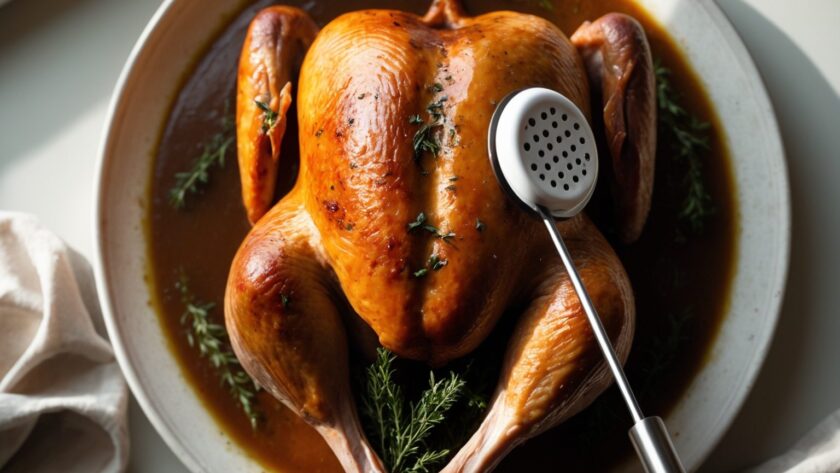
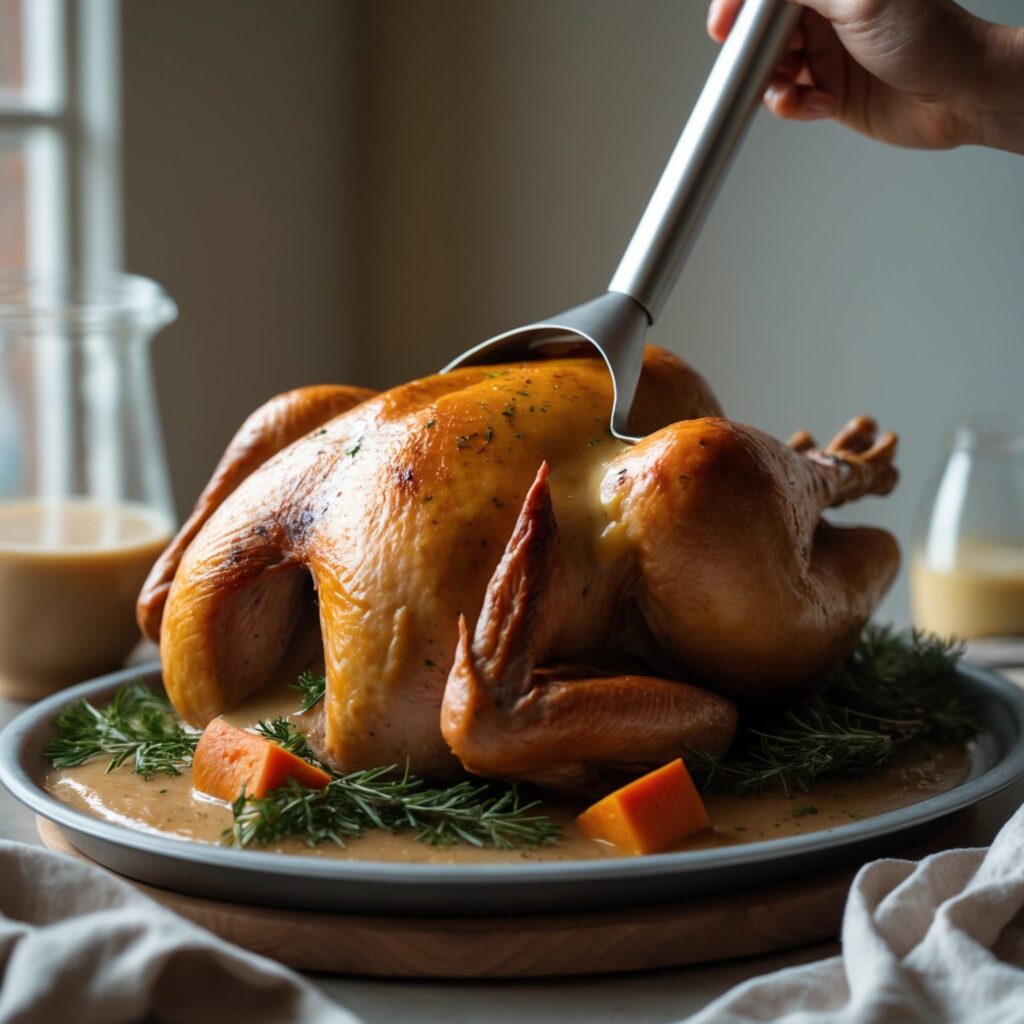
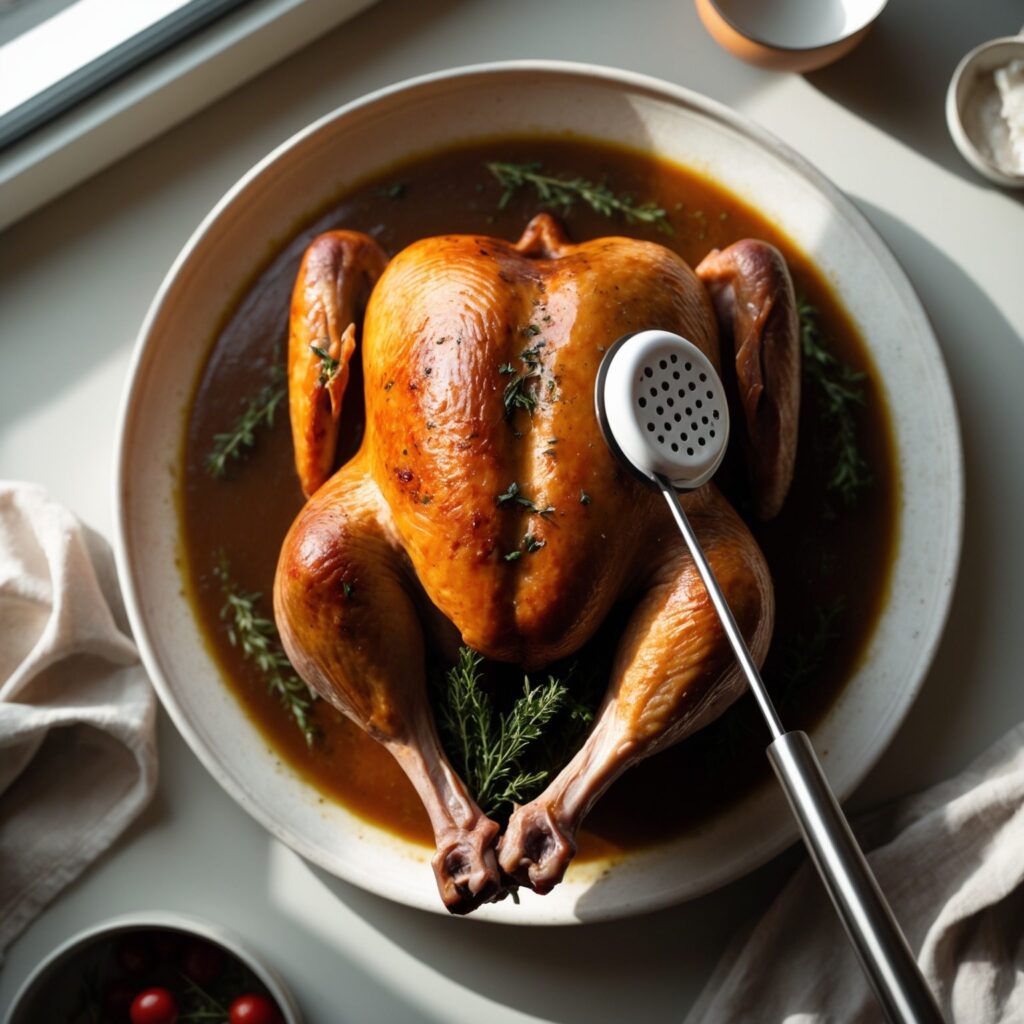
This Martha Stewart turkey baster method turns out a golden bird with crisp skin and meat that stays juicy all the way through. The butter is packed with fresh sage, thyme and rosemary, so every slice carries a warm herbal note, while the lemons and onions tucked inside the cavity keep the drippings bright and savory. Basting with a turkey baster is the small habit that makes the biggest difference here — it keeps the breast from drying out while the legs finish cooking. It’s a classic American holiday centerpiece, adapted from Martha Stewart’s home-cooking style.
Plan on about 4 hours from start to finish, including 30 minutes of prep and roughly 3 to 3½ hours in the oven. Most of that is hands-off roasting time, so it’s easier than it looks; the only real skill is basting on schedule. Make it for Thanksgiving or a holiday table, a weekend gathering with family, or a potluck where you want to bring the main dish everyone talks about.
Why This Martha Stewart Turkey Baster Works
Two things do the heavy lifting. First, herb butter goes both under and over the skin, so the meat absorbs flavor directly while the outside turns deep golden. Second, the baster spreads pan juices and broth over the bird every 30 minutes, which encourages even browning and keeps the surface from drying.
Pouring broth into the roasting pan at the start is just as important — it keeps the drippings from scorching and creates gentle steam in the oven. That steam, plus a long rest before carving, is what keeps the meat tender instead of stringy.
What You’ll Love About It
- Herb butter — Sage, thyme and rosemary flavor the meat from the inside out.
- Simple basting — A turkey baster keeps the skin glossy with very little effort.
- Built-in gravy — The pan drippings become a rich, creamy sauce.
- Crowd friendly — One bird serves 12 with plenty to spare.
Ingredients
Everything below makes one 12- to 14-pound bird plus about 3 cups of gravy. Gather it all before you start, since the butter needs to be soft enough to spread.
- 1 whole turkey (12 to 14 pounds (5.4 to 6.4kg)) — giblets and neck removed, rinsed and patted dry
- 2 tablespoons (28g) kosher salt
- 1 teaspoon (2g) freshly ground black pepper
- 1 cup (227g) unsalted butter — softened, not melted
- 2 tablespoons (6g) fresh sage — finely chopped
- 2 tablespoons (6g) fresh thyme leaves — finely chopped
- 1 tablespoon (3g) fresh rosemary — finely chopped
- 2 medium lemons — halved
- 2 medium yellow onions — quartered
- 4 cups (960ml) low-sodium chicken broth — divided, half for the pan and half for the gravy
- 1/4 cup (30g) all-purpose flour — thickens the gravy
- 1/2 cup (120ml) heavy cream — stir in at the end off a hard boil
Equipment
- Roasting pan — large enough to hold a 14-pound bird with a rack inside.
- Turkey baster — the tool that gives this dish its name.
- Instant-read thermometer — for checking the thigh at 165°F (74°C).
- Fat separator — or a glass measuring cup for defatting the drippings.
- Kitchen twine — to tie the legs together.
- Whisk and saucepan — for a smooth, lump-free gravy.
How to Make Martha Stewart Turkey Baster
Step 1: Preheat and Dry the Bird
Preheat the oven to 350°F (175°C) and set a rack in the lower third. Take the turkey out of the refrigerator 1 hour before roasting so the chill comes off. Pat it dry inside and out with paper towels — a dry surface is the key to crisp skin, so don’t rush this part.
Step 2: Season and Mix the Herb Butter
Season the turkey generously inside and out with the 2 tablespoons (28g) kosher salt and 1 teaspoon (2g) black pepper. In a small bowl, mash the 1 cup (227g) softened butter with the chopped sage, thyme and rosemary until evenly combined. If the butter is still firm, it will tear the skin in the next step.
Step 3: Butter Under and Over the Skin
Use your fingers to loosen the skin over the breast and legs, working gently so it doesn’t tear. Rub half the herb butter under the skin, spreading it evenly over the meat, then rub the rest all over the outside. Work from the center of the breast outward to keep the pockets intact.
Step 4: Fill the Cavity and Truss
Stuff the cavity with the halved lemons and quartered onions. Tie the legs together with kitchen twine and tuck the wing tips under the body so they don’t burn. Set the turkey breast-side up on a rack in a large roasting pan.
Step 5: Add Broth to the Pan
Pour 2 cups (480ml) of the chicken broth into the bottom of the pan, not over the bird. This keeps the drippings from burning and creates steam that helps the meat stay moist. Keep the remaining 2 cups (480ml) broth nearby for basting and the gravy.
Step 6: Roast and Baste
Roast the turkey, basting every 30 minutes with the turkey baster, using the pan juices plus extra broth as needed. If the skin darkens too fast, tent it loosely with foil and keep going. The bird is done when a thermometer in the thickest part of the thigh, without touching bone, reads 165°F (74°C) — about 3 to 3½ hours total.
Step 7: Rest Before Carving
Move the turkey to a carving board and let it rest, loosely tented with foil, for 30 minutes. This lets the juices redistribute through the meat. Carve too soon and they’ll run out onto the board, leaving dry slices.
Step 8: Defat the Drippings
While the turkey rests, pour the pan drippings into a fat separator or glass measuring cup and let the fat rise. Skim off and discard the fat, keeping the defatted juices for the gravy.
Step 9: Start the Gravy
Set the roasting pan over medium heat on the stovetop, or use a saucepan. Add the 1/4 cup (30g) flour and whisk constantly for 1 to 2 minutes to cook off the raw flour taste. Whisk in the reserved juices and the remaining 2 cups (480ml) broth, scraping up the browned bits from the bottom.
Step 10: Finish with Cream
Bring the gravy to a simmer and cook, whisking occasionally, until slightly thickened, about 5 minutes. Stir in the 1/2 cup (120ml) heavy cream and simmer 2 minutes more. Taste and season with salt and pepper.
Step 11: Carve and Serve
Carve the turkey and serve it with the warm gravy. Scatter fresh herbs over the platter if you like. Hold the gravy warm over low heat, whisking in a splash of broth if it thickens too much.
What to Serve With It
Mashed potatoes are the natural partner for that creamy gravy, with buttery dinner rolls to soak up the rest. Add green beans with toasted almonds or a simple roasted Brussels sprouts dish for contrast, and keep the table balanced with a dish of cranberry sauce.
Tips for the Best Results
Let the bird sit at room temperature for the full hour so it cooks evenly from edge to center. Baste quickly and close the oven door — long pauses drop the temperature and slow browning. Finally, rest it a full 30 minutes; a bigger turkey can take 40.
Easy Variations
- Citrus swap — Use 2 oranges in place of the lemons for a sweeter pan sauce.
- Herb change — Swap in 2 tablespoons (6g) fresh parsley for the rosemary.
- Smoky note — Add 1 teaspoon smoked paprika to the herb butter for warmth.
- Lighter gravy — Replace the cream with 1/2 cup (120ml) whole milk.
Storing and Reheating
Keep leftover turkey in an airtight container in the refrigerator for up to 4 days, and the gravy for up to 3 days. Freeze the meat for up to 3 months and thaw it overnight in the refrigerator. Reheat in a 300°F (150°C) oven for 15 to 20 minutes, until it reaches 165°F (74°C) in the center, and warm the gravy gently on the stovetop with a splash of broth.
Nutrition (per serving)
These values are estimates per serving and will vary with the bird and how much gravy you spoon over.
| Nutrient | Amount |
|---|---|
| Calories | 780 kcal |
| Protein | 72g |
| Carbs | 5g |
| Fat | 48g |
| Fiber | 1g |
| Sodium | 680mg |
FAQs
Can I prepare this Martha Stewart turkey baster recipe ahead of time?
Yes — season the bird and rub on the herb butter up to 24 hours ahead, then cover and refrigerate it uncovered on the rack. Pull it out 1 hour before roasting so it isn’t cold going into the oven.
Why did my turkey skin turn dark before the meat was done?
That usually means the oven rack is too high or the butter layer is very thick on top. Tent the breast loosely with foil and lower the heat slightly, then uncover for the last 20 minutes to crisp it back up.
Where does basting a turkey come from?
Basting is an old technique that predates modern ovens, when cooks used a long-handled spoon to spoon pan juices over roasting meat. The bulb baster came along later as a cleaner, faster way to do the same job.
How do I know when the turkey is fully cooked?
Check the thickest part of the thigh without touching bone — it should read 165°F (74°C). If you’re close but not there, roast another 15 minutes and check again rather than guessing.
PrintMartha Stewart-Inspired Turkey Baster
A golden, herb-buttered turkey roasted to juicy perfection, with a rich, savory pan gravy made from the flavorful drippings. This method uses a turkey baster to keep the bird moist and evenly browned, inspired by Martha Stewart’s classic home-cooking style.
- Prep Time: 30
- Cook Time: 210
- Total Time: 240
- Yield: 12 1x
- Category: Dinner
- Method: Roasting
- Cuisine: American
Ingredients
- 1 whole turkey (12 to 14 pounds (5.4 to 6.4kg)), giblets and neck removed, rinsed and patted dry
- 2 tablespoons (28g) kosher salt
- 1 teaspoon (2g) freshly ground black pepper
- 1 cup (227g) unsalted butter, softened
- 2 tablespoons (6g) fresh sage, finely chopped
- 2 tablespoons (6g) fresh thyme leaves, finely chopped
- 1 tablespoon (3g) fresh rosemary, finely chopped
- 2 medium lemons, halved
- 2 medium yellow onions, quartered
- 4 cups (960ml) low-sodium chicken broth, divided
- 1/4 cup (30g) all-purpose flour
- 1/2 cup (120ml) heavy cream
Instructions
- Preheat oven to 350°F (175°C) and set a rack in the lower third. Remove the turkey from the refrigerator 1 hour before roasting to take the chill off. Pat the turkey dry inside and out with paper towels; a dry surface is key to crisp skin.
- Season the turkey generously inside and out with the kosher salt and black pepper. In a small bowl, mix the softened butter with the chopped sage, thyme, and rosemary until well combined.
- Loosen the skin over the breast and legs with your fingers, being careful not to tear it. Rub half of the herb butter under the skin, spreading it evenly over the meat. Rub the remaining herb butter all over the outside of the turkey.
- Stuff the cavity with the halved lemons and quartered onions. Tie the legs together with kitchen twine and tuck the wing tips under the body. Place the turkey breast-side up on a rack in a large roasting pan.
- Pour 2 cups (480ml) of the chicken broth into the bottom of the roasting pan. This keeps the drippings from burning and creates steam for moist meat.
- Roast the turkey, basting every 30 minutes with a turkey baster, using the pan juices and additional broth as needed. If the skin browns too quickly, tent loosely with foil. Continue roasting until a meat thermometer inserted into the thickest part of the thigh (without touching bone) registers 165°F (74°C), about 3 to 3 1/2 hours total.
- Transfer the turkey to a carving board and let it rest, loosely tented with foil, for 30 minutes before carving. This allows the juices to redistribute; carving too soon will dry out the meat.
- While the turkey rests, pour the pan drippings into a fat separator or a glass measuring cup and let the fat rise to the top. Skim off and discard the fat, reserving the defatted juices.
- Set the roasting pan over medium heat on the stovetop (or use a saucepan). Add the flour and cook, whisking constantly, for 1 to 2 minutes to remove the raw flour taste. Whisk in the reserved defatted juices and the remaining 2 cups (480ml) chicken broth, scraping up any browned bits.
- Bring the gravy to a simmer and cook, whisking occasionally, until slightly thickened, about 5 minutes. Stir in the heavy cream and simmer 2 minutes more. Season with salt and pepper to taste.
- Carve the turkey and serve with the warm gravy. Garnish with fresh herbs if desired.
Notes
Storage: Store leftover turkey in an airtight container in the refrigerator for up to 4 days. Gravy can be refrigerated for up to 3 days. Freeze turkey for up to 3 months; thaw overnight in the refrigerator. Reheat turkey in a 300°F (150°C) oven for 15-20 minutes or until heated through. Reheat gravy gently on the stovetop, whisking in a splash of broth if needed.
Nutrition
- Calories: 780
- Sugar: 2g
- Sodium: 680mg
- Saturated Fat: 22g
- Carbohydrates: 5g
- Fiber: 1g
- Protein: 72g
- Cholesterol: 250mg
Keywords: Martha Stewart turkey baster, roast turkey, herb butter turkey, Thanksgiving turkey, pan gravy, turkey baster recipe, classic roast turkey, holiday turkey, American turkey recipe