 anabelle
 By anabelle
 Fact checked by Edward Harrington
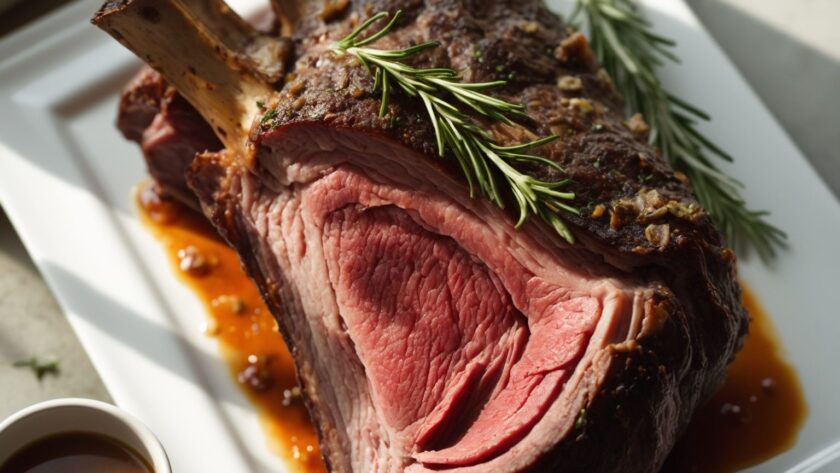
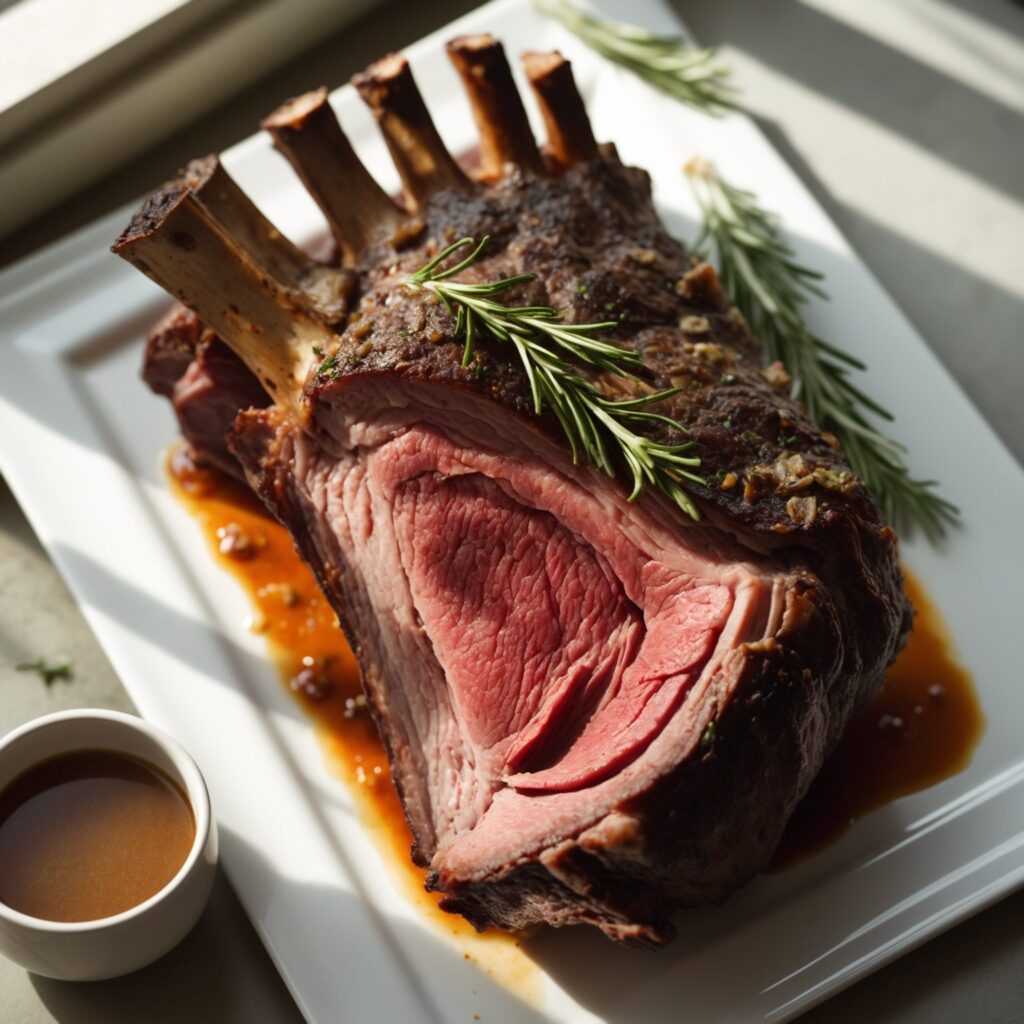
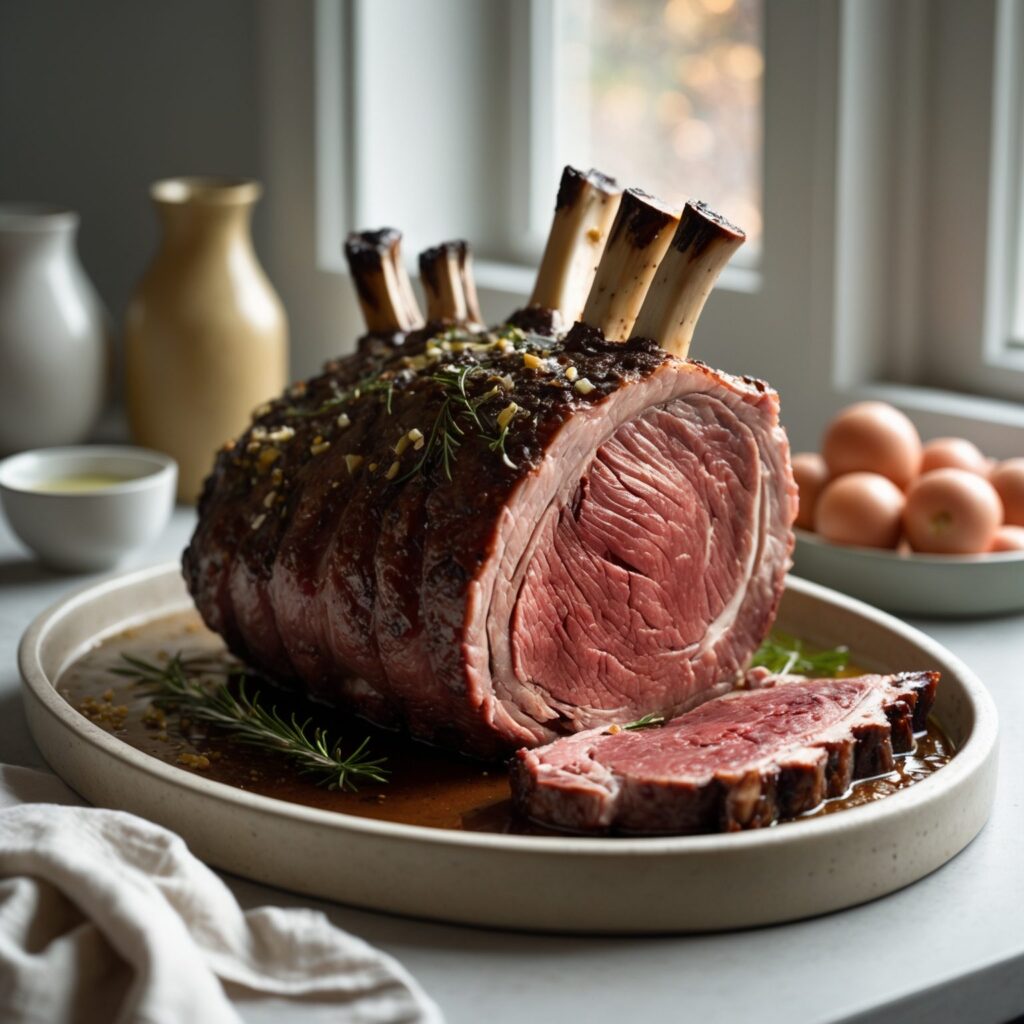
Martha Stewart rib roast is the kind of centerpiece that makes a holiday table feel finished — a bone-in roast with a burnished, garlicky crust and rosy, juicy slices underneath. The meat tastes deeply beefy, seasoned with rosemary, thyme, and Dijon, and the pan sauce is silky and rich enough to spoon over every slice. This version is inspired by Martha Stewart’s classic approach to entertaining, and it stays simple enough for a home cook to pull off.
From start to finish it takes about 155 minutes, with only 20 minutes of that hands-on. The method is straightforward roasting with a pan sauce built right in the same pan, so there’s no separate gravy project. It fits best at a holiday dinner or a weekend gathering when you want something special, though a smaller crowd at a potluck will appreciate it too.
Why This Martha Stewart Rib Roast Works
The roast sits on a bed of halved onions and carrot pieces instead of a rack. That keeps the meat elevated while the vegetables catch the drippings and flavor the pan juices you’ll use for the sauce.
A thick paste of Dijon, garlic, rosemary, and thyme clings to the fatty top and builds that dark crust. Resting the roast for 20 minutes is just as important as the cooking itself — it lets the juices settle so the slices stay juicy.
What You’ll Love About It
- Hands-off roasting — Most of the time is oven time, not work time.
- Built-in pan sauce — The sauce comes together in the same pan.
- Impressive centerpiece — It looks like a special-occasion dish with little effort.
- Clear doneness targets — A thermometer tells you exactly when it’s ready.
Ingredients
Here’s everything you need for the roast and its pan sauce. Use a thermometer you trust for the doneness step.
- 1 (7-pound) (3.2kg) bone-in beef rib roast — 2 to 4 bones, trimmed and tied
- 2 tablespoons (30ml) olive oil
- 3 tablespoons (45g) Dijon mustard
- 4 cloves garlic — finely minced
- 2 tablespoons fresh rosemary — finely chopped
- 2 tablespoons fresh thyme leaves — finely chopped
- 1 tablespoon kosher salt
- 2 teaspoons freshly ground black pepper
- 2 large yellow onions — halved
- 2 medium carrots — cut into 2-inch (5cm) pieces
- 1 1/2 cups (360ml) beef broth
- 1/2 cup (120ml) water
- 2 tablespoons (16g) all-purpose flour
- 2 tablespoons (28g) unsalted butter — cold, cut into small pieces
- Kosher salt and freshly ground black pepper — to taste
Equipment
- Heavy roasting pan — just large enough to hold the roast
- Instant-read thermometer — for checking doneness
- Small saucepan — for finishing the sauce
- Wooden spoon — for scraping up browned bits
- Carving board — with a channel to catch juices
- Fine-mesh strainer — for the pan liquid
How to Make Martha Stewart Rib Roast
Step 1: Dry and Season the Roast
Take the rib roast out of the refrigerator and let it stand at room temperature for 1 hour before roasting. Pat it completely dry with paper towels, then season all over with 1 tablespoon kosher salt and 2 teaspoons black pepper, pressing the seasoning into the surface. Dry meat is the key to a good crust, so don’t rush this.
Step 2: Mix the Herb Paste
Preheat the oven to 350°F (175°C) and position a rack in the lower third. In a small bowl, stir together the olive oil, Dijon mustard, minced garlic, rosemary, and thyme to form a thick paste. Rub it evenly over the entire roast, especially the fatty top.
Step 3: Build the Vegetable Bed
Scatter the halved onions and carrot pieces in the bottom of a heavy roasting pan just large enough to hold the roast. Set the roast fat side up on top of the vegetables, which keeps the meat elevated and flavors the pan juices.
Step 4: Roast to Temperature
Roast uncovered for 1 hour, then check the internal temperature with an instant-read thermometer inserted into the center without touching bone. Continue roasting for 30 to 45 minutes more, until the thermometer reads 120°F (49°C) for rare or 130°F (54°C) for medium-rare. Start checking early — every oven runs a little differently.
Step 5: Rest Before Carving
Transfer the roast to a carving board and tent loosely with foil. Let it rest for 20 minutes — the internal temperature will rise about 10°F (5°C) as it rests. Don’t skip this step, or the juices will run out when you slice.
Step 6: Simmer the Pan Juices
While the roast rests, set the roasting pan over medium heat on the stovetop. Add the beef broth and water and bring to a simmer, scraping up the browned bits with a wooden spoon. Simmer for 3 minutes, then strain the liquid into a small saucepan and discard the vegetables.
Step 7: Thicken the Sauce
In a small bowl, whisk the flour with 2 tablespoons of the hot pan liquid until smooth, then whisk this slurry back into the saucepan. Cook over medium heat, whisking constantly, for 2 to 3 minutes, until the sauce thickens enough to coat the back of a spoon. Keep whisking — lumps form fast if you walk away.
Step 8: Finish with Cold Butter
Remove the saucepan from the heat and whisk in the cold butter pieces one at a time until the sauce is glossy and velvety. Season with kosher salt and black pepper to taste, then keep warm over low heat.
Step 9: Carve and Serve
Remove the strings from the roast and carve it into 1/2-inch (1.3cm) slices against the grain, cutting between the bones to separate them. Serve each slice with a spoonful of the pan sauce.
What to Serve With It
Pair the roast with creamy mashed potatoes or a potato gratin to soak up the sauce, plus something green like roasted asparagus or green beans. A simple buttered dinner roll and a crisp green salad round out the plate nicely.
Tips for the Best Results
Pull the roast out a few degrees below your target, since the temperature climbs as it rests. Let the meat sit uncovered in the refrigerator overnight if you can — a dry surface browns better. Whisk the butter in off the heat so the sauce stays glossy instead of breaking.
Easy Variations
- Smoky rub — Swap 1 teaspoon of the kosher salt for smoked paprika.
- Horseradish sauce — Stir 2 tablespoons prepared horseradish into the finished sauce.
- Reduced herbs — Use 1 tablespoon each of rosemary and thyme for a milder crust.
- Garlic boost — Add 2 extra minced cloves to the mustard paste for a sharper bite.
Storing and Reheating
- Fridge storage — Wrap leftover roast tightly and refrigerate up to 3 days; store sauce separately up to 2 days.
- Freezer storage — Freeze sliced roast in an airtight container for up to 2 months.
- Make-ahead rub — Prepare the herb mustard rub up to 24 hours ahead and refrigerate it.
- Gentle reheating — Warm slices in a 300°F (150°C) oven with a splash of broth, covered, for 10 to 12 minutes to 165°F (74°C).
Nutrition (per serving)
These values are estimates per serving and will vary with the size of your roast and how much sauce you spoon over.
| Nutrient | Amount |
|---|---|
| Calories | 682 kcal |
| Protein | 54g |
| Carbs | 8g |
| Fat | 46g |
| Fiber | 1g |
| Sodium | 890mg |
FAQs
Can I make this Martha Stewart rib roast recipe ahead of time?
You can mix the herb mustard rub up to 24 hours ahead and apply it to the roast up to 2 hours before cooking. The finished roast is best served the day it’s cooked, but leftovers reheat well.
Where did rib roast come from?
Rib roast is a traditional English centerpiece that became popular for holiday tables, especially around Christmas. It’s cut from the rib section of the steer and is prized for its marbling and tender texture.
What if I don’t have fresh rosemary or thyme?
Use about one-third the amount of dried herbs in place of the fresh ones, since dried herbs are more concentrated. Rub the paste over the roast as directed.
How do I know when the roast is done?
Use an instant-read thermometer inserted into the center without touching bone — 120°F (49°C) for rare or 130°F (54°C) for medium-rare before resting. The temperature will rise about 10°F (5°C) as the roast rests.
PrintMartha Stewart-Inspired Rib Roast
A beautifully marbled bone-in rib roast seasoned with garlic, rosemary, and Dijon, roasted to a rosy medium-rare and finished with a rich, silky pan sauce. Inspired by Martha Stewart’s classic approach to entertaining, this centerpiece roast delivers a crisp, burnished crust and tender, juicy slices perfect for a holiday table.
- Prep Time: 20
- Cook Time: 135
- Total Time: 155
- Yield: 8 1x
- Category: Dinner
- Method: Roasting
- Cuisine: American
Ingredients
- 1 (7-pound) (3.2kg) bone-in beef rib roast (2 to 4 bones), trimmed and tied
- 2 tablespoons (30ml) olive oil
- 3 tablespoons (45g) Dijon mustard
- 4 cloves garlic, finely minced
- 2 tablespoons fresh rosemary, finely chopped
- 2 tablespoons fresh thyme leaves, finely chopped
- 1 tablespoon kosher salt
- 2 teaspoons freshly ground black pepper
- 2 large yellow onions, halved
- 2 medium carrots, cut into 2-inch (5cm) pieces
For the Sauce
- 1 1/2 cups (360ml) beef broth
- 1/2 cup (120ml) water
- 2 tablespoons (16g) all-purpose flour
- 2 tablespoons (28g) unsalted butter, cold, cut into small pieces
- Kosher salt and freshly ground black pepper, to taste
Instructions
- Remove the rib roast from the refrigerator and let it stand at room temperature for 1 hour before roasting. Pat it completely dry with paper towels and season all over with 1 tablespoon kosher salt and 2 teaspoons black pepper, pressing the seasoning into the surface.
- Preheat the oven to 350°F (175°C) and position a rack in the lower third. In a small bowl, stir together the olive oil, Dijon mustard, minced garlic, rosemary, and thyme to form a thick paste. Rub this mixture evenly over the entire roast, especially the fatty top.
- Scatter the halved onions and carrot pieces in the bottom of a heavy roasting pan just large enough to hold the roast. Set the roast fat side up on top of the vegetables, which will keep the meat elevated and flavor the pan juices.
- Roast uncovered for 1 hour, then check the internal temperature with an instant-read thermometer inserted into the center without touching bone. Continue roasting for 30 to 45 minutes more, until the thermometer reads 120°F (49°C) for rare or 130°F (54°C) for medium-rare.
- Transfer the roast to a carving board and tent loosely with foil. Let it rest for 20 minutes—the internal temperature will rise about 10°F (5°C) as it rests, so do not skip this step or the juices will run out when sliced.
- While the roast rests, set the roasting pan over medium heat on the stovetop. Add the beef broth and water and bring to a simmer, scraping up the browned bits with a wooden spoon. Simmer for 3 minutes, then strain the liquid into a small saucepan and discard the vegetables.
- In a small bowl, whisk the flour with 2 tablespoons of the hot pan liquid until smooth, then whisk this slurry back into the saucepan. Cook over medium heat, whisking constantly, for 2 to 3 minutes, until the sauce thickens enough to coat the back of a spoon.
- Remove the saucepan from the heat and whisk in the cold butter pieces one at a time until the sauce is glossy and velvety. Season with kosher salt and black pepper to taste, then keep warm over low heat.
- Remove the strings from the roast and carve it into 1/2-inch (1.3cm) slices against the grain, cutting between the bones to separate them. Serve each slice with a spoonful of the pan sauce.
Notes
Storage: Wrap leftover roast tightly and refrigerate for up to 3 days; store sauce separately for up to 2 days. Freezing: Freeze sliced roast in an airtight container for up to 2 months; thaw overnight in the refrigerator. Make-ahead: The herb mustard rub can be prepared up to 24 hours ahead and refrigerated; apply it to the roast up to 2 hours before cooking. Reheating: Place slices in a 300°F (150°C) oven with a splash of broth, covered, for 10 to 12 minutes, or until just heated through; reheat sauce gently over low heat, whisking in a little water if needed.
Nutrition
- Calories: 682
- Sugar: 3g
- Sodium: 890mg
- Saturated Fat: 18g
- Carbohydrates: 8g
- Fiber: 1g
- Protein: 54g
- Cholesterol: 145mg
Keywords: Martha Stewart rib roast, standing rib roast, bone-in rib roast recipe, prime rib, holiday roast, beef rib roast, rosemary garlic roast, Dijon crusted roast, Christmas dinner recipe, Sunday roast, classic American roast